The cursed garden of roses and thorns: ADHD friendly journaling
January 2026

On Hacker News, someone captured this perfectly:
“I have ADHD. I think. Pretty sure. I have thoughts, ideas, projects, concepts, links, things to read… fired at my brain all day every day. I can go deep on a topic for hours, but then be hit by a barrage of micro ideas. I really struggle to stay on track and focus.”
You might relate to this if you have ADHD or VAST (Variable Attention Stimulus Trait).

Externalizing through journaling, to-do lists, and timers helps, but not always. Often, the act of journaling itself becomes a challenge. Prioritizing, assigning timelines, and maintaining structure overwhelms you. The guilt from incomplete journals compounds the stress of unfinished tasks.
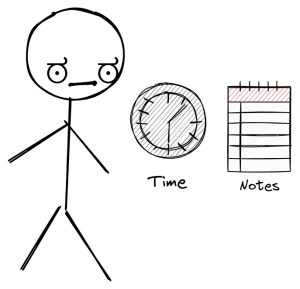
That’s where journaling with the Garden of Roses and Thorns mindset helps. It gives you a lightweight structure, flexible enough for your novelty-seeking mind, but intentional enough to prevent the chaos.
Who this is for
This concept is designed for anyone navigating ADHD, VAST, executive dysfunction – or feeling overwhelmed by stress and procrastination; and for creative minds who feel they aren’t meeting their own potential.
Note: This method complements professional support; it does not replace it. If symptoms significantly disrupt your life, consider speaking with a healthcare provider about diagnosis and treatment options.
The concept – Roses, Thorns and a Curse

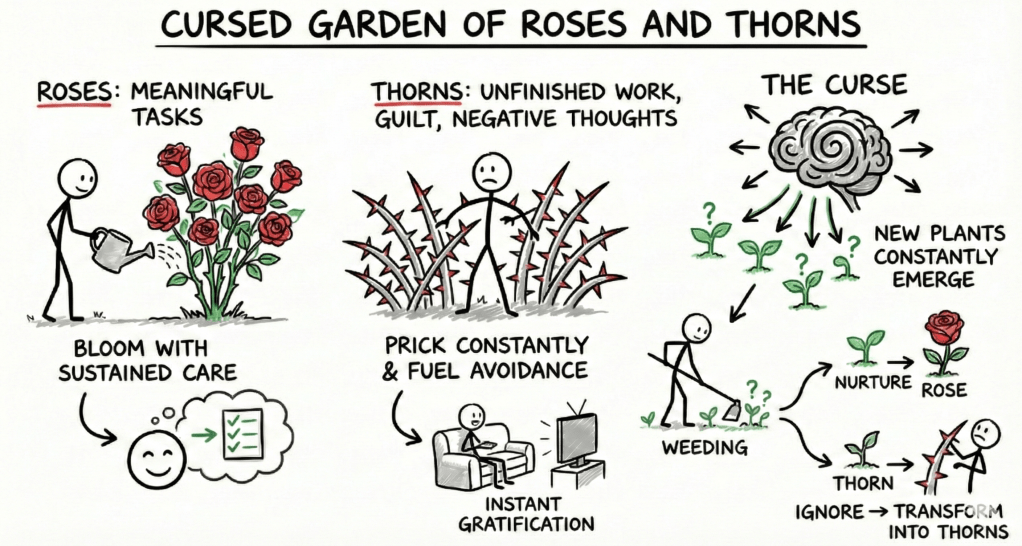
Your brain is a cursed garden –
of roses and thorns
Rose plants are meaningful tasks that bloom with sustained care.
Thorns are unfinished work, guilt, negative thoughts, and regretful distractions that prick you constantly. These further fuel avoidance and instant gratification.
The curse: new plants constantly emerge, and your brain gravitates toward them. These sprouts demand attention. You must either weed them out or nurture them into roses – otherwise, they transform into thorns that hurt you.
The gardener’s challenge
You, the gardener, must tend to a few critical rose plants such as your job, academics, and your health.
But as you start working – or even before you begin – the curse unfolds: a new attractive sprout appears. You chase it instead. Then another emerges. You chase that too. Your critical roses never receive the sustained attention they need to bloom.
Roses that never bloom don’t simply disappear – they transform into thorns. These thorns of unfinished work hurt you, deepening self-doubt and fueling the very avoidance that created them.
The core issue
Every plant requires sustained effort to flower. Your garden is overcrowded, but most plants are irrelevant distractions, not true roses. Jumping between them yields nothing. Meanwhile, your critical roses wither and become thorns.
The solution
You must forcefully weed out constantly appearing thoughts or let them die by starving them of attention.
A gardener’s work requires a special set of tools.
This Roses & Thorns method provides the lightweight, intentional framework you need to tend your mental garden.
Tools for this journaling method
- Your journal – for reflection, planning, and assessment.
- A companion page – for managing thoughts while you work
Your journal
Before you start
- This method doesn’t follow a rigid structure. Your brain is a unique garden, not a factory. You can make changes according to your needs and preferences.
- Avoid perfectionism from day one, or you’ll quickly grow to hate it.
- This isn’t about ticking boxes and building streaks. It’s a space to relax and spend time with yourself. The aim is to write through a process that suits you so you’ll enjoy the process itself.
- You don’t need to journal daily from the start.
- You don’t need to label, group or categorize every item.
Remember: Thorns drive pleasure seeking behavior and distraction. Eliminate them quickly.
How to journal
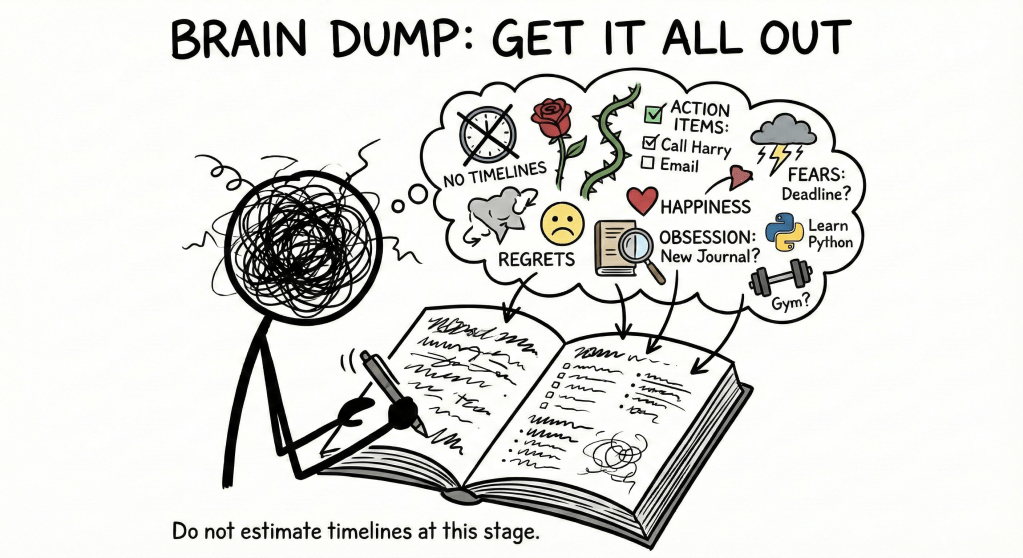
1. Brain dump
Don’t estimate timelines at this stage.
Write all the rose plants and thorns that need your attention: pending tasks and negative emotions that are hurting you.
Write about
- Action items: both Professional and personal. Don’t forget to mention even the small tasks such as scheduling a call and replying to emails or seemingly unimportant activities such as cleaning.
- Hyper-fixations and Obsessions: there are many seemingly small and specific topics that occupy that your brain is currently locked onto. You want to buy a new diary to journal. It becomes your priority and you abandon your tasks to dive deep into finding the perfect journal. But some obsessions are good for you. Find time for them.
- Fears: afraid of missing an important deadline?
- Regrets: spent endless hours on something not so useful and regret it?
- Your mental state: How are you feeling?
- Happiness: What made you happy recently? What excites you ahead?
- RSD triggers: situations where you fear criticism or rejection. Writing ‘Afraid to send that email because it might seem stupid’ externalizes the fear and reduces its power.
It’s fine if your list reads: “Learn Python. …Set up a 30-minute call with Harry. ….Explore gym equipment online.
At this stage, the aim is to create a representation of your brain.
Tip:
Break your work into smaller parts. Instead of “Give car to service,” write “Call service center.” Instead of “Work on presentation,” write “Work on slide 1 for 10 minutes.”
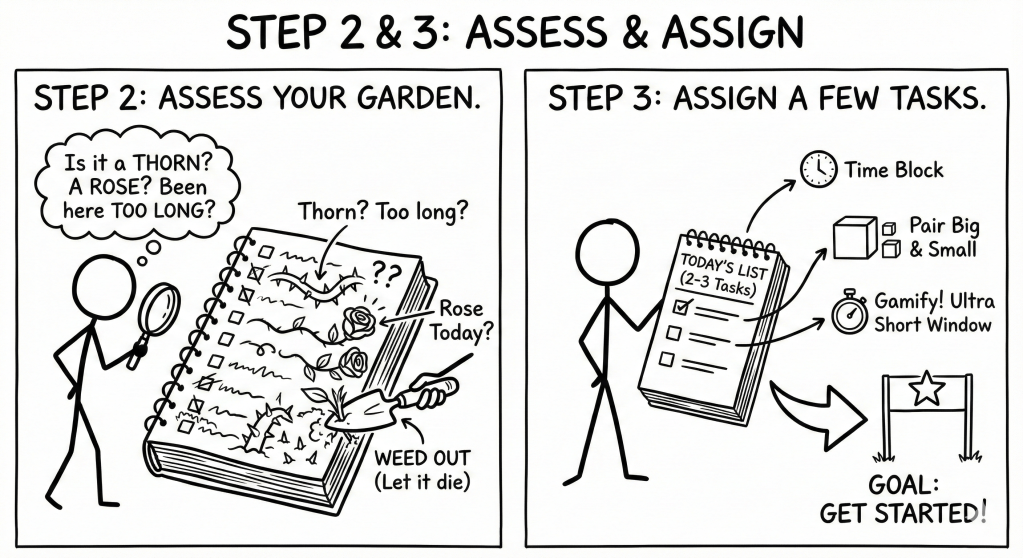
2. Assess your garden
After your brain dump, scan your list and ask:
Is something here turning into a thorn?
In this stage, mark any hard deadlines. (e.g., ‘Presentation – Due in 4 days’). This helps counter time blindness—where the future feels distant until it’s suddenly today. By labeling the deadline now, you can visualize the ‘Rose’ withering into a ‘Thorn’ and create the urgency you need to start.
Can something give you a rose today?
Has a thorn been there too long?
Start it or weed it out entirely. Maybe you don’t need to pursue that interesting-sounding project after all.
3. Assigning a few tasks
Pick 2-3 tasks for today and a few for the next couple of days.
Don’t timeline everything – it overwhelms your brain and triggers avoidance. Set time blocks only for some activities.
Pair one larger job with smaller ones. Use the quick wins to build momentum.
Assigning ultra-short time windows for small actions helps you gamify. The first goal should be to get started.
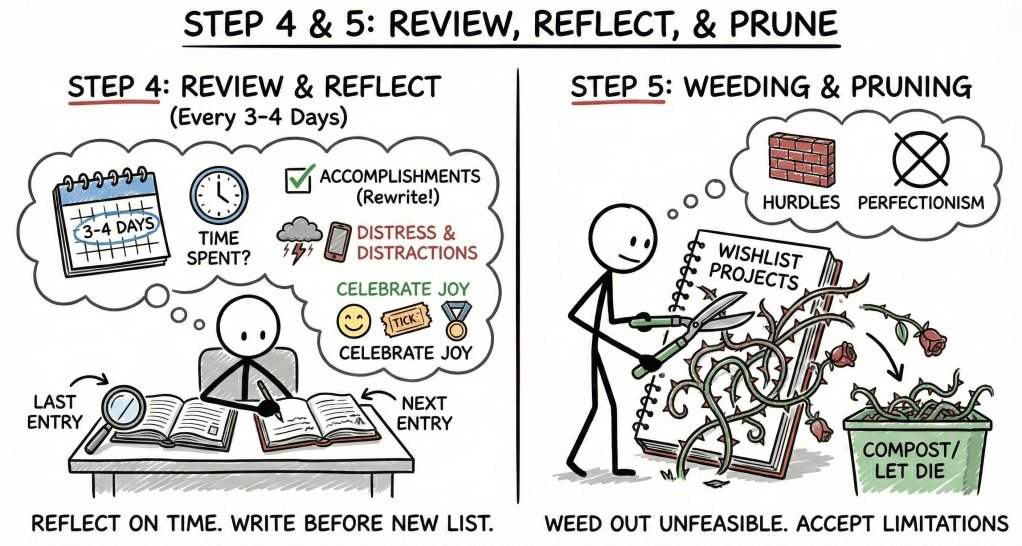
4. Review, reflect, and write the next entry
This needn’t happen daily. Once in every 3 – 4 days is a good start.
Instead of reviewing “progress,” reflect on how you spent time since your last entry.
How to reflect
- Thoroughly read your previous entry
- Note what worked and what didn’t.
- Write reflections in your next entry before making a new to-do list.
Don’t just tick off finished jobs and move on. Your next entry should include:
- Time spent: How did you actually spend time since your last entry?
- Accomplishments: Rewrite them. It is more satisfying instead of just crossing out the previous entries and helps you get a clearer view of your time.
- Unplanned activities
- Distress moments: Had negative emotions or unwanted thoughts? Could they have been avoided?
- Distractions: What were they and what triggered them?
- Unmet targets: Try to analyze if you missed your goals.
Celebrate and reflect on joy – ADHD brains often struggle to fully immerse in enjoyment and may not benefit from the afterglow of a good experience in the same way others do. That can make it harder to return to work feeling satisfied.
Counter this by recording:
- Enjoyable experiences (“Watched a movie – felt genuinely good”).
- Eliminated distractions (“Ignored my phone for 2 hours straight”).
- Achieved targets (any size).
What to do if you missed journaling for a month?
Just put a date and restart! Briefly note how you spent your time and what might have pulled you away from journaling.
Journaling once every few weeks is still better than not journaling at all.
5. Weeding and pruning
As you journal, you’ll notice many projects in your wish list were never feasible. Some pursuits stall because you obsess over perfection or imagine hurdles. Find a new approach, or let them die. It is necessary to accept your limitations. The journal is your foundation.
But chaos doesn't wait for journaling time - it strikes while you're working. What do you do when a new sprout appears mid-task?
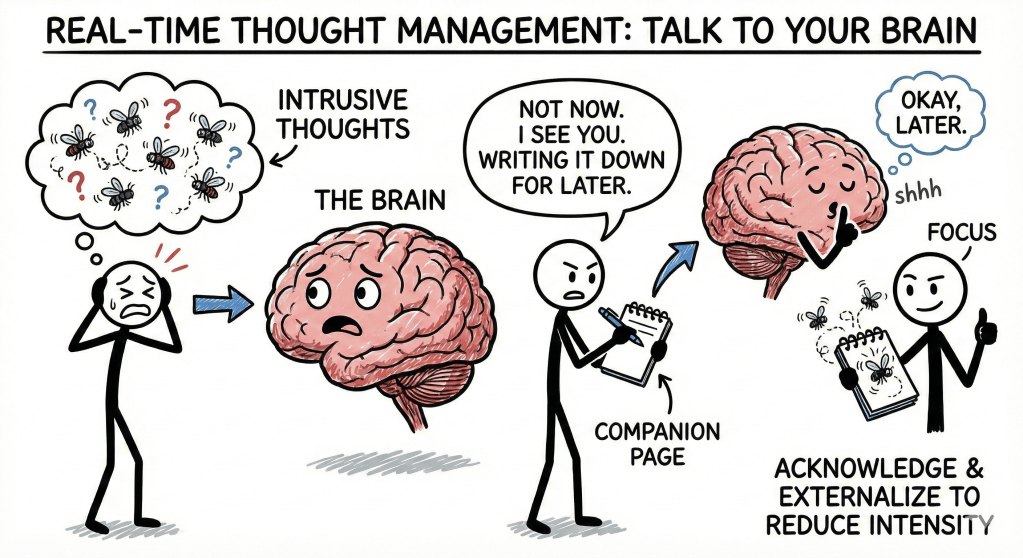
Using a companion page for managing thoughts in real-time: Keep talking to your brain
You need a tool to manage your thoughts in real time. When you talk to your brain and acknowledge a thought, its intensity drops sharply. This is a form of external emotional regulation. By moving the impulse from your mind to the paper, you create a ‘cool down’ gap that allows you to choose your reaction rather than just acting on impulse
For this, you need the second tool of this method – your companion page – a paper or notebook which is handy, visible and easily accessible.
Write only 2-3 action items for the day or for the next few hours. It is not always convenient to have your journal open and visible to you while working. Plus, many people hesitate to write in it impulsively, wanting to preserve it for “proper” entries. Use this paper as a visible reminder.
Note down the interrupting thoughts. If you feel like giving up and seeking instant gratification or exploring another thought, talk it out on the paper – what is triggering it, why it feels so tempting and what might be the consequences. Tell your brain that you will take a look at these new ideas after finishing your current job.
Building momentum and resilience
Beyond capturing thoughts, you need practices to strengthen your garden over time.
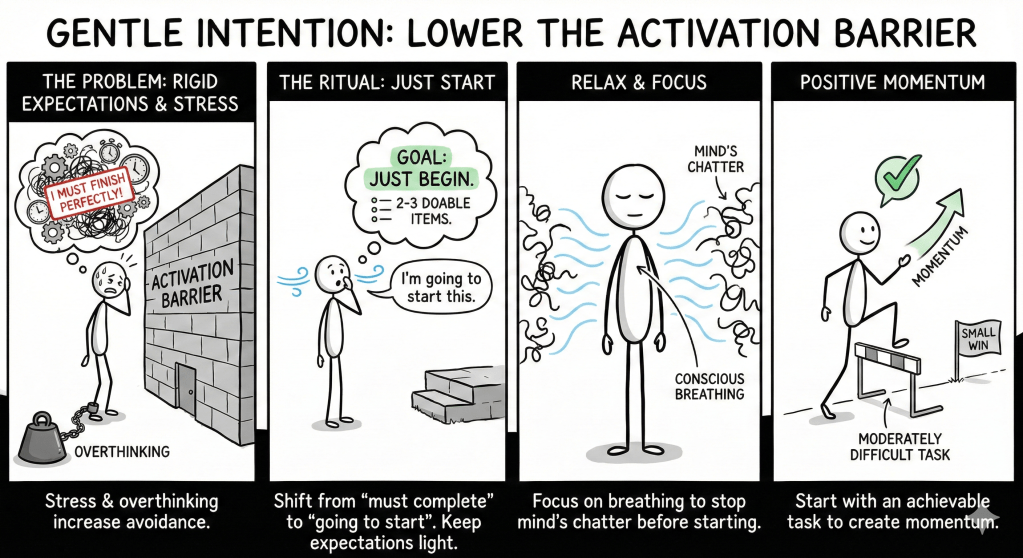
Gentle Intention: Lower the activation barrier
Stress and overthinking before starting a task increases avoidance and often triggers ADHD paralysis (that feeling of being frozen despite wanting to work). Instead of planning your day with rigid expectations, use this simple ritual:
- Pick 2–3 doable journal items for today.
- Try not to estimate efforts or imagine obstacles. Just say: “I’m going to start this.” The shift from “I must complete X” to “I’m going to start X” removes the mental weight that triggers procrastination.
- Keep expectations light. Your goal is to begin, not to finish perfectly.
It’s critical to observe what causes even slight mental stress. Your plants require delicate, careful tending.
Just before beginning a task, consciously focus to relax your breathing and your body. This helps quiet the mind’s chatter. Start your day with a moderately difficult task, one that demands focus but is achievable. This creates a sense of achievement, setting positive momentum for everything else.
Invasive species in the garden
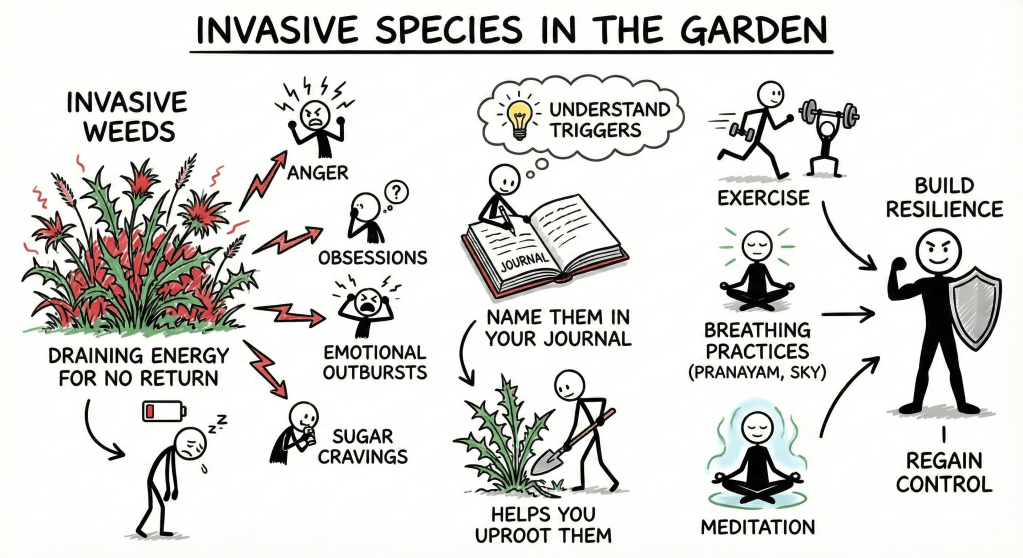
Anger, obsessions, emotional outbursts, sugar cravings – these are invasive weeds draining energy for no return. Name them in your journal. Understanding what triggers them helps you uproot them. Exercise, breathing practices (like Pranayam, Sudarshan Kriya), and meditation build the resilience you need to regain control.
Give yourself time off regularly. To build resilience your always-firing brain needs rest, not just activity.
How to know it’s working for you
Don’t expect perfect days. Expect slightly less chaotic days. Expect to occasionally abandon roses for thorns, and recover faster. Look for small wins like these –
- journaled (even if sporadically)
- noticed patterns in your distraction
- caught yourself mid-spiral and grabbed your paper
- paused before switching tasks (even if you switched anyway)
- wrote a distraction down instead of acting on it immediately
- set a timer and actually looked at it
- celebrated something small
- deleted an item from your list without guilt
- said “no” to a project
- realized an obsession isn’t worth your time (and felt okay about it)
Work with your brain, not against it
The goal isn’t a perfectly manicured garden. It’s a garden you can actually tend. Creativity and novelty are your specialty. Keep exploring new ideas; they’ll fill your space with rare, beautiful roses.
The Roses & Thorns method isn’t about forcing your brain into high-level productivity molds. It’s about tending your mental garden with intention and self-compassion. Stop fighting your brain’s natural rhythms. Start working with them.
Your roses are waiting.

 thinkersutra.com
Leave a comment